QMD Protocol℠ in Naples, FL
Although the term QMD began as a reversal of the author’s initials (David Mark Quigley) and initially stood for Quantitative Mycotoxin Deactivation, the protocol has since expanded in scope and purpose. Today, the QMD Protocol℠ represents Quantitative Molecular Deactivation℠, a comprehensive framework for identifying, neutralizing, and remediating some of the most harmful biotoxins found in indoor environments. Its four pillars—Assessment, Identification, Treatment, and Validation—form a complete and measurable process designed to eliminate dangerous toxigenic biological hazards from interior spaces.
The QMD Protocol℠ goes far beyond the secondary metabolites produced by mold. It also addresses a wide range of biotoxins generated by other microbial contaminants, including both gram-negative and gram-positive bacteria, and incorporates the deactivation of endotoxins associated with gram-negative organisms. When it comes to safeguarding human health, the concern is not only the microbes themselves but the toxic molecular structures they release. The QMD Protocol℠ is designed to confront both.
The QMD Protocol℠ has four critical components or phases, each equally important as the others.
1. Assessment
A risk assessment of the environment suspected to be contaminated needs to be undertaken first. This is done from a biohazard standpoint, adapted for but not limited to biotoxin contamination, using bio recovery site risk assessment guidelines.
The following factors are used in the assessment:
- Determine the type of risks present – what is the Bio Safety Risk Group they fall into as recommended by ABSA Risk Group Data Base.
- Identify the Area Risk Group Classification – either offering Low, Medium, or High impact risk levels of the project's site/area (including surrounding areas).
- Determine Class (I – IV) of Risk Mitigation Measures Required (calculated by measuring the Risk Group against the Area Risk Group impact level).
- Risk Mitigation Guidelines (established by Class I, II, III, or IV risk mitigation measures). This will determine workflow and required PPE used to mitigate risk during the project.
- Life Safety Assessment (a nine-step assessment as outlined by Life Safety Code and building code requirements).
- Risk Assessment Sign-Off (sign-off by the client, project manager, and technicians involved in the project).
Each potentially contaminated property is made up of micro and macro environments; essentially, it is a living environment unto itself and needs to be assessed as such.
Ideally, a visual inspection would be undertaken during this phase. However, it could also be undertaken during the identification phase.
2. Identification
It is not only important to identify the presence (or absence) of biotoxins, but also to establish in-depth quantitative reporting of their type and quantity.
Methodical sampling procedures need to be followed to ensure accurate surface samples are taken, with their analysis being undertaken and reported by a reputable independent third-party laboratory.
3. Treatment
The logic behind an effective deactivation treatment may seem straightforward, but biotoxins—regardless of whether they originate from mold, bacteria, or other microbial sources—have repeatedly proven difficult to neutralize in situ. Even when microbial growth is successfully removed, the molecular toxins they leave behind often remain active and harmful.
Historically, treatment approaches focused on the costly and disruptive removal of any materials suspected of harboring contamination: building components, mechanical systems, furnishings, fabrics, and more. The QMD Protocol℠ advances beyond this outdated paradigm by treating contamination as a biological, chemical, and mathematical problem, applying all three disciplines in synergy to solve it effectively and sustainably.
While mycotoxins are chemical molecules produced by mold, they are only one category of biotoxins of concern. The evolved QMD Protocol℠ addresses a broader molecular landscape—including bacterial toxins, endotoxins, and other harmful microbial derivatives—by focusing on breaking apart their underlying molecular structures and or removing them. Once the contaminant has been identified at the molecular level, the treatment process calculates the affected area and determines the precise treatment volume required to neutralize the biotoxin load. When this calibrated application is complete, the target molecular structures are broken down, rendered inert and removed where necessary, efficaciously treating the problem.
If significant biological contamination—such as active mold growth, bacterial colonies, or other pathogenic pollutants—is discovered during Assessment or Identification, appropriate remediation measures may be required as part of the QMD Protocol℠'s overall treatment.
Similarly, if an excessive biotoxin load is detected, strategic load reduction
may be included
to stabilize the environment and optimize conditions for full molecular deactivation and remediation
under the QMD Protocol℠.
4. Validation
Assessing risk, identifying biotoxin contamination, and implementing a targeted molecular deactivation treatment are essential steps—but none of it is complete without validation. Validation is the scientific confirmation that the targeted biotoxins—whether mycotoxins, bacterial toxins, endotoxins, or other harmful molecular structures—have been successfully neutralized and rendered inert.
As with the initial identification phase, post-treatment surface sampling must be collected with precision from the previously affected areas. These samples must then be analyzed by an independent, accredited third-party laboratory to ensure objectivity and scientific accuracy. Only through this independent verification can the results be confirmed, demonstrating that the treatment achieved its intended outcome and that the interior environment now meets the standards set by the QMD Protocol℠.
The QMD Protocol℠ Summary
The components above outline the full QMD Protocol℠. When each stage is carried out in a deliberate, sequential, and scientifically precise manner, the protocol delivers a consistent and verifiable outcome: the effective deactivation of harmful molecular contaminants within interior environments.
The QMD Protocol℠—through its framework of Quantitative Molecular Deactivation℠—represents a significant advancement in the field of biotoxin mitigation. Developed from both biohazard and bio-recovery perspectives, it introduces an innovative, science-driven methodology for neutralizing a wide spectrum of biotoxins, not only those produced by mold but also those derived from bacteria and other microbial sources.
Because it targets molecular structures rather than relying solely on physical removal, the QMD Protocol℠ offers a powerful solution adaptable to multiple industries and operational environments. Its applications extend far beyond residential remediation, with transformative potential for sectors such as food and coffee processing, agricultural feed production, indoor environmental hygiene, and even the deactivation of high-risk compounds like weaponized aflatoxins. Wherever molecular biotoxin control is critical, the QMD Protocol℠ provides a modern, rigorous, and effective path forward.
How the site-specific QMD Protocol℠ was implemented in the case study below is described in further detail in the following pages.
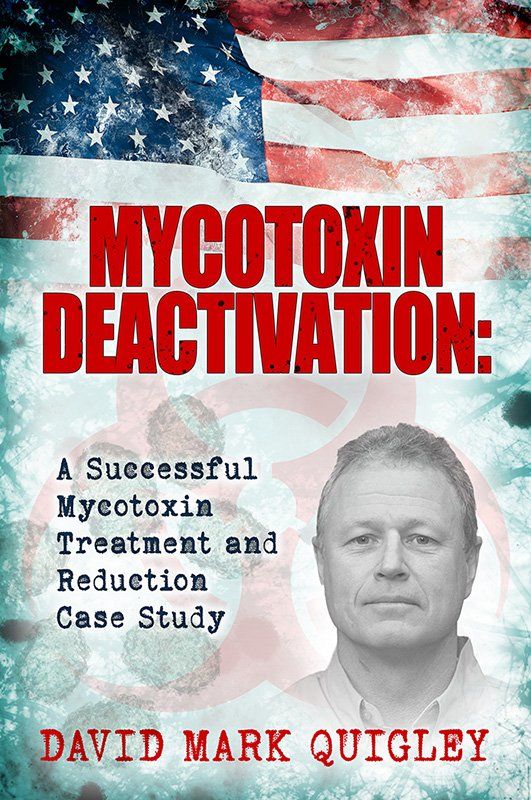
Please click on the link below and download our Case Study, showing quantifiable mycotoxin deactivation, validated by our third-party Network Partner, RealTime Labs.
Please click on the link below that takes you to RealTime Labs mycotoxin sampling White Paper, that validates the Case Study documented in
Mycotoxin Deactivation: A Successful Mycotoxin Treatment and Reduction Case Study.
We’re here to help! Simply call (239) 245-9672 to discuss your requirements.